Planning a trip should feel exciting, not fragile. john hancock gold travel insurance is often positioned for travelers who want more than bare-minimum protection without stepping into the highest-priced tier. It generally suits families, international travelers, and anyone with meaningful prepaid trip costs who wants support for trip cancellation, interruption, emergency medical events, evacuation, baggage issues, and travel delays.
Think of the Gold plan as a balanced shield: stronger than basic coverage, usually more budget-friendly than premium options, and practical for both domestic and overseas travel. Its value often shines when flights are expensive, schedules are tight, or health and weather risks could turn one disruption into a costly chain reaction.






John Hancock Gold Travel Insurance Overview
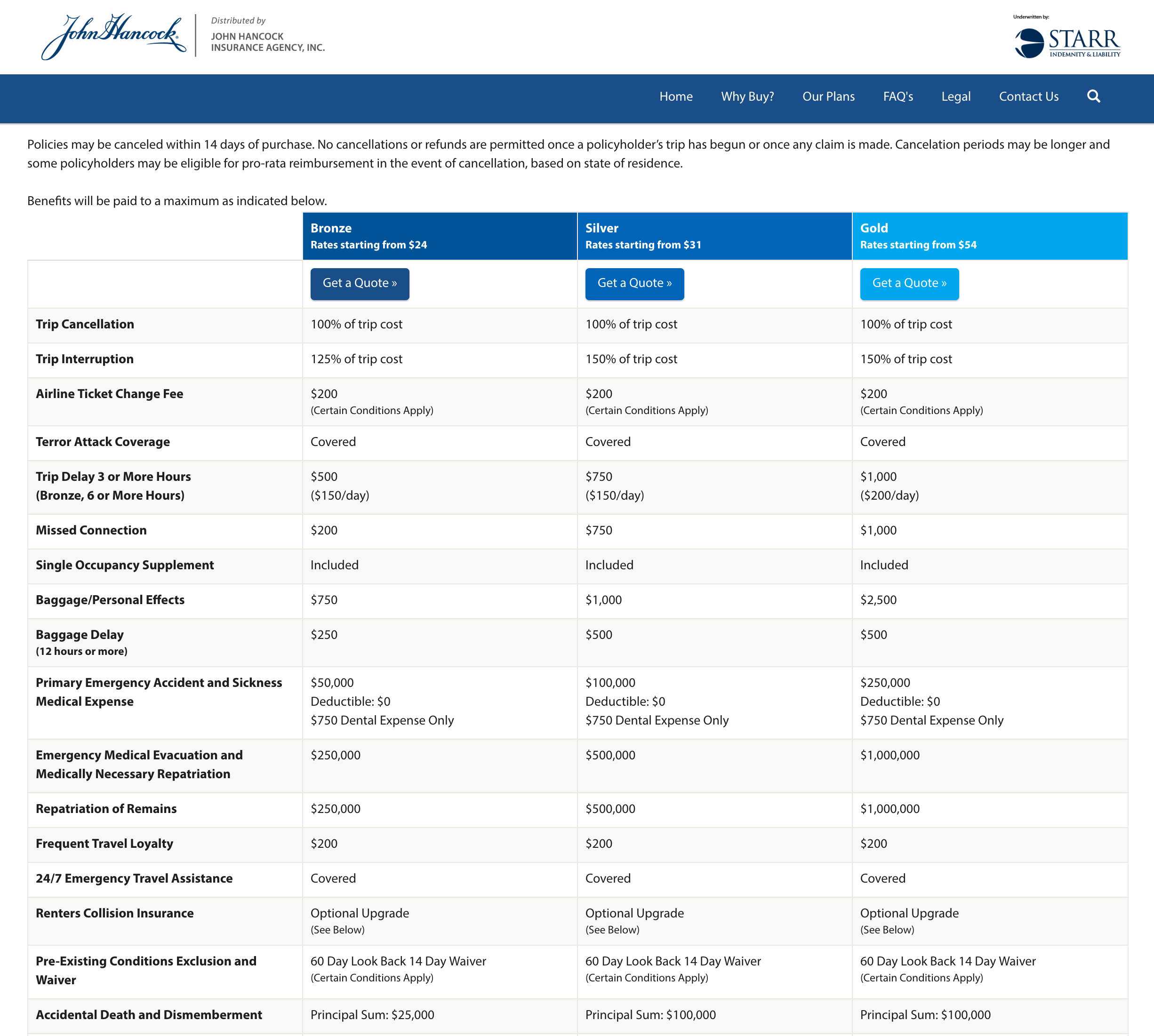
John Hancock Gold Travel Insurance sits in the sweet spot between bare-bones trip protection and top-tier, higher-cost plans. It is designed for travelers who want meaningful security without paying for every premium extra in the market.
The Gold plan is generally aimed at vacationers, families, couples, cruise travelers, and business travelers taking domestic or international trips who want balanced protection across the moments that most often disrupt travel. In practical terms, it focuses on the areas that create the biggest financial headaches: trip cancellation or interruption, travel delays, baggage problems, and emergency medical support while away from home. For travelers who want more than a minimal safety net but do not necessarily need the richest premium package, this plan often feels like the practical middle lane.
Where Gold Fits in the Travel Protection Spectrum
At its core, John Hancock Gold is built for people who want broader reimbursement potential and stronger travel-disruption support than entry-level plans usually offer, while staying more budget-conscious than high-end options. That makes it especially appealing for trips with prepaid costs, tighter schedules, connections, cruises, or international segments where one delay can trigger multiple expenses.
| Coverage Type | What It Covers | Typical Limits | Best For |
|---|---|---|---|
| Trip Cancellation | Prepaid, nonrefundable trip costs if a covered reason forces cancellation before departure | Up to 100% of insured trip cost | Travelers with flights, tours, cruises, or lodging booked in advance |
| Trip Interruption | Unused trip costs and extra transportation if a trip must be cut short for a covered reason | Often up to 125% to 150% of trip cost | International trips, multi-city itineraries, and cruises |
| Travel Delay | Meals, lodging, and local transport during qualifying delays | Fixed daily benefit after a waiting period | Connection-heavy trips and weather-sensitive travel dates |
| Baggage and Medical Support | Lost, stolen, or delayed baggage plus emergency accident/sickness care and evacuation assistance | Varies by policy; moderate to strong mid-tier limits | Longer trips, family travel, and overseas travel |
Compared with a basic travel insurance option, the Gold plan usually delivers higher reimbursement ceilings, more useful interruption protection, and a better cushion for delays and baggage setbacks. A lower-tier plan may cover the essentials, but it can feel tight when trip costs are substantial or when disruptions cause a chain reaction of new expenses.
Against premium travel protection, Gold is typically the more measured choice. Premium plans may add richer benefit amounts, expanded specialty protections, or more generous medical and evacuation limits. Gold, however, often wins with travelers who want solid breadth without overbuying, especially when the trip is important but not extreme in cost, duration, or risk profile.
Travelers commonly choose this plan for a few clear reasons:
- It helps protect prepaid vacation spending on domestic getaways, resort trips, and holiday travel.
- It offers a more reassuring buffer for international itineraries where medical access, delays, or missed connections can become expensive fast.
- It suits travelers who want balanced protection for cruises, guided tours, and family trips without jumping to the highest-priced tier.
- It appeals to people who value practical coverage for common disruptions rather than a stripped-down policy with limited breathing room.
For many travelers, that balance is the real draw: enough protection to feel prepared, without paying as if every trip were a once-in-a-lifetime expedition.
Pro Tip: Gold is often most attractive when your trip includes multiple prepaid components like flights, hotels, tours, or cruise deposits, because moderate disruptions can quickly turn into major out-of-pocket losses.
Coverage Details, Benefits, and Exclusions
John Hancock Gold Travel Insurance shines when your trip meets real-world chaos: canceled flights, sudden illness, lost bags, or a medical emergency far from home. The plan’s value is not just in what it offers, but in the fine print that decides when those benefits actually activate.
Think of this coverage as a layered safety net. Some protections focus on prepaid trip costs, others step in during medical emergencies, and several are designed to soften the blow of delays and baggage problems. Reading the covered reasons, timing rules, and exclusions closely is what turns a policy from “nice to have” into genuinely useful protection.
What the Safety Net Really Catches
Trip cancellation can reimburse nonrefundable prepaid expenses if you must cancel for a covered reason, such as serious illness, injury, certain family emergencies, or other listed events. Trip interruption applies after departure, helping recover unused trip costs and sometimes extra transportation expenses if the journey is cut short. Emergency medical benefits can help with eligible treatment costs during the trip, while emergency evacuation addresses medically necessary transport to an appropriate facility. Baggage benefits may help when luggage is lost, stolen, or damaged, and travel delay coverage can reimburse meals, lodging, and essentials after a qualifying delay long enough to trigger the benefit.
Below is the practical split between what travelers often expect to be covered and where the plan may draw hard lines.
| Benefit | Included Situations | Exclusions | Notes |
|---|---|---|---|
| Trip Cancellation | Covered illness, injury, death, severe weather, certain legal or travel disruptions | Fear of travel, change of mind, known events, noncovered work issues | Usually applies only to prepaid, nonrefundable costs |
| Trip Interruption | Must return early due to covered emergency or interruption event | Voluntary early return, foreseeable issues, policy-listed excluded causes | May include extra transport and forfeited trip portion |
| Emergency Medical / Evacuation | Unexpected sickness or injury during trip, medically necessary evacuation | Routine care, nonemergency treatment, high-risk exclusions, some pre-existing cases | Evacuation must generally be arranged or approved as required by policy |
| Baggage / Delay | Lost, stolen, damaged baggage; covered travel delay expenses after minimum delay | Unattended property, wear and tear, cash, some electronics limits, short delays | Receipts, carrier reports, and timing proof are often essential |
Timing matters just as much as the reason for the claim. Watch these rules carefully before you buy.
- Pre-existing condition coverage may be available only if the plan is purchased within a defined window after the initial trip deposit.
- You may need to insure the full nonrefundable trip cost and be medically able to travel when you buy the policy.
- Eligibility windows often apply to cancellation-related protections more than to all benefits equally.
- Travel delay benefits usually start only after a minimum number of delayed hours listed in the policy.
- Baggage claims often require prompt reporting to the airline, hotel, police, or tour operator.
- Coverage can be limited if an event was foreseeable when the policy was purchased.
Some situations sound adventurous, but insurance may treat them as avoidable or excluded risk.
- Activities: Mountaineering, scuba beyond recreational limits, racing, or extreme sports may be excluded unless specifically covered.
- Destinations: Travel to sanctioned, war-affected, or officially unsafe regions may face reduced or no coverage.
- Events: Civil unrest, epidemics, named storms, or strikes known before purchase may not qualify as covered reasons.
- Practical example: If you book after a hurricane is already forecast for your destination, cancellation coverage may not respond.
- Practical example: If a traveler leaves a laptop bag unattended in a cafe, baggage reimbursement may be denied.
- Practical example: If a medical issue stems from a recent untreated condition and the waiver requirements were missed, benefits may be limited.
Pro Tip: Buy early, insure your full trip cost accurately, and save every receipt, itinerary update, and carrier notice. Those small habits can make the difference between a smooth reimbursement and a frustrating denial.
Pricing Factors, Value, and Plan Comparisons

Price is where travel insurance gets practical fast. With John Hancock Gold, the premium usually reflects how much risk you bring to the trip and how much protection you want to lock in before takeoff.
The biggest cost drivers are straightforward: age, trip length, destination, total trip cost, and optional add-ons. Older travelers often pay more because medical risk rises with age. Longer trips increase exposure time, so premiums tend to climb as travel days stack up. Destination matters too; international trips, remote regions, or places with high medical costs can push rates higher. Trip cost is another key factor because plans often insure prepaid, nonrefundable expenses, so a more expensive vacation generally means a higher premium. Add-ons such as rental car coverage or enhanced cancellation flexibility can also raise the total, but they may improve the plan’s real-world usefulness.
Where Gold Hits the Sweet Spot
John Hancock Gold usually sits in the middle of the lineup, aiming for travelers who want more than bare-minimum protection without paying for the richest premium package. That makes it appealing for travelers who care about balanced protection, reasonable pricing, and broader trip confidence. Compared with entry-level options, Gold often delivers stronger reimbursement limits and more practical trip protection. Compared with top-tier plans, it may cost less while still covering the concerns most travelers actually lose sleep over.
| Plan Level | Key Benefits | Ideal Traveler | Value Notes |
|---|---|---|---|
| Basic / Bronze | Lower-cost core protection, lighter limits, fewer extras | Short domestic or low-cost trip traveler | Best for tight budgets; may feel thin for bigger trips |
| Gold | Stronger trip and medical balance, broader overall protection | Families, mid-budget vacationers, frequent planners | Often the best middle ground between price and confidence |
| Premium / Platinum | Higher limits, richer add-ons, more generous protection | Luxury, complex, or high-cost international travelers | Worth it when financial exposure is high |
Gold offers especially strong value when the trip is meaningful enough that losing deposits would hurt, but not so expensive that only maximum limits will do. If you are booking a family beach vacation, a multi-stop international trip, or a moderate-cost cruise, Gold can feel like the smart middle lane. A lower tier may be better for a quick budget getaway with minimal prepaid costs. A higher tier may be more suitable if you are a senior traveler with a costly itinerary, carrying large prepaid expenses, or heading somewhere where higher medical and evacuation limits feel essential.
Here is how that value logic plays out across common traveler types:
- Budget traveler: If your trip is short, domestic, and inexpensive, a lower-tier plan may stretch your dollars better than Gold.
- Family traveler: Gold often makes sense when multiple bookings, tours, and lodging costs create enough financial exposure to justify stronger mid-range protection.
- Senior traveler: Gold can work well for moderate trips, but a higher-tier option may be wiser when age, health concerns, or expensive itineraries increase the stakes.
- International traveler: Gold becomes attractive when you want a sturdier blend of travel and medical protection without jumping to the top-priced tier.
Pro Tip: Do not judge value by premium alone. The better question is whether the plan’s limits and features match what you would actually stand to lose if the trip goes sideways.
In other words, Gold tends to shine when you want more than entry-level reassurance but less than premium-level spending. That positioning is exactly why it often appeals to practical travelers who want protection that feels substantial, not excessive.
Claims Process, Documentation, and Customer Experience
When travel plans go sideways, the real test of insurance is not the brochure—it is how smoothly your claim moves from chaos to reimbursement. John Hancock Gold works best for travelers who act fast, document well, and stay organized from day one.
Claims are generally easier when you report the incident promptly, collect proof before expenses pile up, and keep every receipt, invoice, and travel record in one place. A clear paper trail can turn a stressful disruption into a more confident, faster recovery process.
From Disruption to Payout: What Smart Claim Filing Looks Like
The most successful claims usually follow a disciplined sequence. If your trip is interrupted by illness, delay, baggage trouble, or another covered event, use this step-by-step approach to reduce friction and help the insurer verify your loss quickly.
Follow this sequence as soon as the problem happens:
- Report the incident immediately: Contact the airline, hotel, tour provider, police, or medical facility first so there is an official record tied to the event.
- Notify the insurer or assistance team: Use the claims portal, phone support, or emergency assistance line when urgent medical or travel coordination is needed.
- Gather supporting evidence: Save receipts, cancellation notices, medical records, baggage reports, boarding passes, and proof of payment.
- Complete the claim form carefully: Match dates, names, policy details, and dollar amounts exactly to your documents.
- Submit within the required timeframe: File as soon as possible, even if a few documents are still pending, then add them during follow-up if allowed.
- Respond to requests quickly: Claims handlers may ask for clarification, additional receipts, or provider statements before approving reimbursement.
- Track review and payment: Monitor claim status, save confirmation emails, and verify whether reimbursement is sent by check, transfer, or another method.
Documentation quality often decides speed. For medical claims, expect treatment notes and itemized bills. For trip cancellation or interruption, provide supplier invoices and proof of the covered reason. For baggage and delay claims, time-stamped reports and expense receipts are especially important.
| Claim Type | Required Documents | Filing Tips | Common Mistakes |
|---|---|---|---|
| Trip Cancellation | Booking invoices, payment proof, cancellation notice, medical or event documentation | Submit supplier penalties and dates clearly | Missing proof of why the trip was canceled |
| Medical Emergency | Doctor notes, itemized bills, prescriptions, payment receipts | Keep translated records if treated abroad | Sending only summary bills without treatment details |
| Baggage Loss/Delay | Airline report, baggage claim tags, receipts for essentials, photos if useful | File with the carrier before leaving the airport | Buying non-essential items without receipts |
| Trip Delay | Carrier delay notice, boarding pass, receipts for meals, hotel, transport | Ask for written delay confirmation immediately | No proof that the delay met policy requirements |
Timelines vary by claim complexity, but simple claims with complete paperwork usually move faster than cases involving overseas treatment, multiple vendors, or missing records. For smoother handling, keep digital backups of every document, photograph paper receipts before they fade, and maintain a short timeline of events with dates, names, and amounts paid.
Pro Tip: Create one folder for your trip containing policy details, emergency numbers, booking confirmations, and a running log of incidents. That single habit can dramatically reduce back-and-forth during claims review.
Customer experience often depends on communication touchpoints. Emergency assistance can help with hospital referrals, transportation coordination, or urgent travel guidance while you are still on the trip. After filing, expect follow-up emails, portal updates, or phone calls requesting extra information, and reply quickly to avoid preventable delays. Travelers who keep records of every conversation—date, representative name, and what was promised—are usually better positioned if a claim needs clarification or escalation.
How to Choose and Use the Plan Effectively
Buying travel insurance should feel less like guesswork and more like building a smart safety net. The John Hancock Gold plan works best when you match it to your trip’s real risks, not just the cheapest premium on the screen.
Start by looking at four pressure points: your health, your destination, your total prepaid trip cost, and how much disruption you can realistically absorb. If you have ongoing medical concerns, are visiting a remote area, or are putting a meaningful amount of money into flights, tours, and hotels, a mid-tier plan like Gold may be a practical fit because it often balances stronger protection with manageable cost.
Your Smart-Fit Decision Map
Use this quick comparison to decide whether the plan fits your travel profile. Think of it as a reality check: the more expensive, medically uncertain, or logistically fragile your trip is, the more valuable careful policy review becomes.
| Factor | Lower Need | Higher Need for Gold-Level Protection |
|---|---|---|
| Health | No known issues, short trip | Medication needs, older traveler, concern about emergencies |
| Destination | Urban, nearby, easy medical access | Remote, international, higher transport or evacuation risk |
| Trip Investment | Low prepaid costs, flexible bookings | Nonrefundable flights, cruises, tours, premium lodging |
| Risk Tolerance | Can self-fund setbacks | Would struggle with delays, cancellations, or surprise bills |
Before you buy, review the policy with a buyer’s checklist instead of relying on marketing summaries. This is where smart travelers protect themselves from unpleasant surprises.
- Confirm the maximum benefit limits for trip cancellation, interruption, medical coverage, baggage, and evacuation.
- Read the exclusions carefully, especially for pre-existing conditions, adventure activities, alcohol-related incidents, and known events.
- Check whether optional upgrades are available, such as enhanced cancellation flexibility or sports-related coverage.
- Review the cancellation rules, including purchase deadlines, refund windows, and when coverage actually begins.
- Verify definitions for key terms like “covered reason,” “travel delay,” and “medical emergency.”
- Make sure destination-specific risks, supplier default rules, and missed connection terms align with your itinerary.
Once you have the certificate of insurance, read it like a travel toolkit, not legal wallpaper. Focus first on the section listing covered reasons for cancellation or interruption, because those reasons determine whether a claim stands or falls. Next, locate the emergency procedures section so you know whether pre-authorization is required for hospitalization, evacuation, or specialist referrals. Finally, save the contact information for customer support and emergency assistance in your phone, email, and printed trip file.
- Search the certificate for headings such as “Benefits,” “Exclusions,” “Definitions,” and “How to File a Claim.”
- Highlight deadlines for reporting incidents, because late notice can weaken reimbursement chances.
- Mark any “must call first” language tied to emergency transport or hospital admission.
- Screenshot policy numbers, assistance numbers, and claim portals before departure.
Pro Tip: If a clause feels vague, ask for clarification before purchase. The best time to solve confusion is when your suitcase is still unpacked.
To get the most from the plan during travel, act like your own case manager. Documentation turns inconvenience into recoverable value. Save receipts for meals, hotels, taxis, medicine, and replacement essentials. Photograph baggage delays, airline notices, and posted cancellation boards. If a flight disruption happens, ask the carrier for a written delay or cancellation statement. For illness or injury, keep discharge papers, doctor notes, prescriptions, and payment records. Most importantly, contact the assistance service early; they can often guide you to approved care, explain next steps, and reduce the risk of making an avoidable claim mistake.
Real-World Examples, Use Cases, and Visual Content Ideas
Travel insurance feels abstract until a trip goes sideways. These practical examples show how John Hancock Gold Travel Insurance may turn stressful moments into manageable detours.
Because every claim depends on the policy wording, timing, and documentation, the smartest way to read these examples is as realistic guidance, not automatic guarantees. Think of them as a preview of how benefits may respond when the unexpected interrupts a well-planned journey.
Trip Trouble in Motion: Scenarios, Smart Proof, and Story-Driven Visuals
The Gold plan becomes easier to understand when you picture it in action. In each case below, the trigger, your paperwork, and your response speed often shape the practical result just as much as the event itself.
| Scenario | Possible Benefit Triggered | Needed Proof | Practical Outcome |
|---|---|---|---|
| A traveler in Italy develops severe abdominal pain and needs hospital care. | Emergency accident and sickness medical coverage; possibly emergency assistance services. | Hospital records, physician notes, itemized bills, receipts, and trip itinerary. | Eligible treatment costs may be reimbursed, helping reduce the shock of paying for urgent care abroad. |
| A family flying to Orlando misses a cruise embarkation after the first flight is delayed by mechanical issues. | Trip delay or missed connection benefit, depending on the policy terms. | Airline delay statement, new transport receipts, cruise documents, boarding passes, and timestamps. | The family may recover eligible extra hotel, meal, or catch-up transportation expenses instead of absorbing the full loss. |
| A winter storm shuts down the departure airport the night before an international vacation. | Trip cancellation or trip interruption if the weather event meets the policy definition. | Weather notices, airline cancellation notice, prepaid booking confirmations, and proof of nonrefundable costs. | Nonrefundable trip payments may be partially recoverable, protecting a large prepaid travel budget. |
| A checked suitcase disappears on arrival in Tokyo, leaving the traveler without clothing and essentials. | Baggage loss or baggage delay benefit, depending on whether the bag is delayed or declared lost. | Property Irregularity Report, airline correspondence, purchase receipts for essentials, baggage tags, and inventory list. | The traveler may be reimbursed for covered essentials first, then for lost belongings if the bag is not recovered. |
To use benefits smoothly, small habits matter. Keep digital copies of everything and act early while details are still easy to verify.
Pro tip: Read the definitions section first; many claims rise or fall on how the policy defines delay, sickness, or covered weather.
Pro tip: Save receipts in real time; memory fades faster than paperwork.
Pro tip: Contact the assistance line quickly during medical or travel emergencies; guidance can be as valuable as reimbursement.
Pro tip: Baggage claims move faster when your airline report and item list match exactly.
Pro tip: Pre-existing condition rules, time limits, and exclusions deserve a second look before departure.
For visual content, strong illustrations can make these situations instantly relatable and persuasive. Use scenes that feel cinematic, human, and specific rather than generic travel icons.
- Airport disruption: A crowded departure board glowing with red cancellation notices, travelers rebooking at a gate desk, rolling suitcases clustered under stormy window light, and one calm traveler checking policy details on a phone.
- Emergency support abroad: A nighttime clinic in a historic European city, a traveler speaking with a doctor while a support representative appears on the phone screen, with passports, discharge papers, and medication on the table.
- Family trip protection: Parents and children at a terminal after a missed connection, tired but regrouping over snacks and updated boarding passes, showing how coverage can soften the financial blow of chaos.
- Baggage recovery: An arrival hall with an empty carousel, a traveler filing a baggage report, then a split-scene follow-up showing essential replacement purchases and the eventual reunion with a recovered suitcase.
These examples work best when paired with clear captions, emotional realism, and visible documentation details, helping readers connect policy language to moments they can easily imagine happening on their own trips.
Closure
The smartest travel insurance choice is not the flashiest plan, but the one that fits your real trip risks. If you want a middle-ground option with broad protection, clearer value for mid-to-high trip investments, and useful emergency support while traveling, john hancock gold travel insurance can be a compelling match. Read the certificate carefully, know your deadlines, keep every receipt, and let preparation turn uncertainty into confidence.
Q&A
What does john hancock gold travel insurance usually cover?
It commonly includes trip cancellation, trip interruption, emergency medical care, emergency evacuation, baggage loss or delay, and travel delay benefits.
Who is this plan best for?
It fits travelers who want broader protection than entry-level plans, especially families, seniors, and international travelers with nonrefundable expenses.
How is Gold different from basic and premium plans?
Basic plans usually offer lower limits and fewer extras, while premium tiers may add stronger medical limits, richer cancellation benefits, or optional upgrades. Gold often sits in the practical middle.
Does it cover pre-existing medical conditions?
Coverage may be available only if the policy is bought within an eligibility window and all plan rules are met. Always verify the waiver terms and timing requirements.
What are common exclusions?
Excluded situations often include known events before purchase, risky adventure activities, intoxication-related incidents, noncovered destinations, and losses without proper documentation.
What documents help a claim get paid faster?
Keep receipts, medical records, airline notices, police reports when relevant, proof of payment, and written confirmation showing why the loss happened and when it occurred.
How can travelers use the plan more effectively?
Buy early, review covered reasons, save all trip records, report problems quickly, contact emergency assistance when serious issues arise, and follow claim deadlines closely.