Massachusetts drivers often pay about $1,600 to $2,600 yearly for full coverage, or roughly $135 to $215 monthly. Minimum coverage commonly runs about $500 to $900 yearly, or $40 to $75 monthly. That puts the state around the middle to slightly above average in New England, depending on driver profile and city.
If you want a policy that protects both your car and your budget, the real secret is not chasing the cheapest number. It is matching coverage, deductible, and discounts with how you actually drive in Massachusetts.




Average cost of auto insurance in Massachusetts
Massachusetts drivers usually pay less than many Americans expect, but the bill can still swing sharply depending on the policy you choose. If you want a fast benchmark, think of minimum coverage as roughly $45-$85 per month and full coverage as about $140-$230 per month.
That puts the average yearly cost for minimum coverage near $540-$1,020, while full coverage commonly lands around $1,680-$2,760 per year. In real shopping quotes, some drivers will land below these ranges and others above them, but these figures are a practical starting point for understanding what auto insurance in Massachusetts often costs right now.
What a typical premium looks like at a glance
Pricing changes fast based on driving history, age, and where you live, but the table below shows realistic estimate ranges for common Massachusetts driver situations. Use it as a budgeting shortcut, not a guaranteed quote, because insurers weigh risk differently and often reward cleaner records and more stable garaging patterns with noticeably lower premiums.
| Driver type | Coverage level | Estimated monthly cost | Estimated annual cost |
|---|---|---|---|
| Safe adult driver | Minimum | $45-$70 | $540-$840 |
| Safe adult driver | Full | $140-$190 | $1,680-$2,280 |
| Young driver | Minimum | $90-$150 | $1,080-$1,800 |
| Young driver | Full | $240-$380 | $2,880-$4,560 |
| Driver with one recent ticket | Full | $180-$270 | $2,160-$3,240 |
| Driver with one at-fault accident | Full | $210-$330 | $2,520-$3,960 |
Compared with nearby states, Massachusetts often sits in the middle-to-better-value range for auto insurance, especially for experienced drivers with clean records. That said, it is not always the cheapest in New England.
- Massachusetts is often cheaper than Connecticut and Rhode Island for similar full coverage profiles.
- It is often close to or slightly higher than Maine, which tends to post some of the region’s lowest rates.
- It usually tracks around Vermont or a bit above it, depending on insurer and driver history.
- It can be similar to or lower than New Hampshire for many standard-risk drivers.
Even within the state, premiums can shift meaningfully between Boston, inner-ring suburbs, and quieter towns. Insurers price based on the likelihood and cost of future claims, so geography matters more than many drivers realize.
City drivers often see higher rates because dense traffic, tighter parking, theft risk, and more frequent claims push losses upward. Suburban drivers may pay moderate rates, especially in commuter-heavy areas where congestion and repair costs still raise claim frequency. Rural drivers sometimes benefit from lower traffic density, but long travel distances, deer collisions, and limited repair options can still affect pricing.
Pro tip: If your quote feels high, do not assume Massachusetts is simply expensive. A nearby ZIP code, different garaging address, or insurer-specific rating model can change the number more than most drivers expect.
Main factors that affect insurance rates
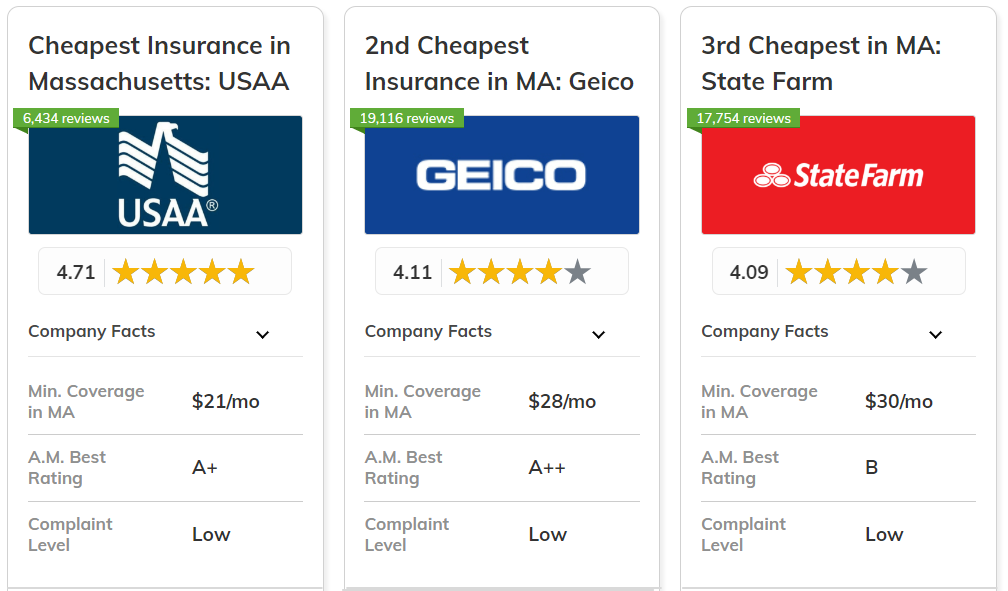
In Massachusetts, car insurance prices are not pulled from thin air. Insurers build your premium from a set of risk signals that can either reward steady habits or make your rate climb faster than expected.
The biggest pricing drivers usually include your age, driving record, garaging ZIP code, vehicle, annual mileage, claim history, deductible, and coverage choices. Massachusetts also limits how insurers use credit-related information, so pricing leans more heavily on driving and policy details than in many other states.
What quietly moves your premium up or down
Think of your rate as a balance between how likely you are to file a claim and how expensive that claim might be. A safer profile, lower-risk car, and leaner policy setup often mean lower premiums, while a history of tickets, costly claims, or broader protection can push prices higher.
Here is how common rating factors can affect what you pay:
- Age and experience: Older, more experienced drivers often pay less; teens and newly licensed drivers usually pay more because they are statistically riskier to insure.
- Driving history: Clean records can help keep premiums down, while accidents, speeding tickets, or serious violations can raise them for years.
- ZIP code: Dense areas with more traffic, theft, vandalism, or repair costs often bring higher rates than quieter locations.
- Vehicle type: Modest cars with solid safety records usually cost less to insure than luxury, performance, or frequently stolen models.
- Annual mileage: Driving fewer miles may reduce risk exposure; long commutes and high annual mileage can increase premiums.
- Coverage selections: Higher liability limits, comprehensive, collision, rental reimbursement, and other add-ons usually increase the price.
- Deductible choice: A higher deductible often lowers your premium, while a lower deductible raises it because the insurer pays sooner after a covered loss.
- Claim history: Multiple prior claims, especially at-fault or repeated comprehensive claims, can signal higher future costs and lead to steeper rates.
| Factor | Why it matters | Lower-cost scenario | Higher-cost scenario |
|---|---|---|---|
| Age | Experience affects accident risk | Middle-aged driver with years licensed | Teen or newly licensed driver |
| Driving record | Violations predict future losses | No tickets or recent accidents | Recent at-fault crash or DUI |
| ZIP code | Local claim frequency varies | Lower-traffic, lower-theft area | Busy urban area with more claims |
| Vehicle | Repair costs and theft rates differ | Safe sedan with lower repair costs | Luxury SUV or sports car |
| Mileage | More time on the road means more exposure | Low annual mileage | Long commute and heavy driving |
| Coverage and deductible | More insurer payout means higher price | Higher deductible, basic add-ons | Low deductible, broad protections |
Two details deserve extra attention because they can reshape your quote quickly. Claim history matters even when the claims seem small: frequent glass, weather, or collision claims can make an insurer view you as more expensive to cover. And deductible strategy is one of the fastest ways to change premium cost; choosing a deductible you could realistically afford out of pocket may lower your monthly or annual bill.
Massachusetts also stands apart on credit-related rules. Unlike some states where credit score can strongly influence auto premiums, Massachusetts restricts that kind of pricing, so insurers generally focus more on driving behavior, vehicle risk, territory, and prior losses. That can be good news if your credit profile is less than perfect, but it also means your record behind the wheel carries even more weight.
Pro tip: If you want a lower quote, ask for pricing with two deductible options and verify your annual mileage estimate. Small changes there can produce meaningful savings without cutting essential protection.
Coverage requirements and optional protections
In Massachusetts, the cheapest policy is not always the safest bet. What you are legally required to carry is only the starting line; smart protection begins when you understand what each layer actually does.
State law requires several core coverages before you can register and drive a car. Bodily injury to others helps pay medical bills, lost wages, and legal claims if you injure someone in a crash you cause. Personal injury protection (PIP) pays certain medical expenses, lost income, and replacement services for you and your passengers, no matter who caused the accident, up to the policy limit. Bodily injury caused by an uninsured auto helps if an uninsured driver injures you or your passengers. Damage to someone else’s property pays for repairs to another person’s car, fence, building, or similar property when you are at fault. These minimums keep you legal, but they can run out fast after a serious accident.
Build a policy that can take a hit
Minimum coverage is designed to satisfy Massachusetts rules, while full coverage usually means adding protection for your own vehicle and broader financial backup. It is not a legal term, but in practice it often includes liability, PIP, uninsured motorist, plus collision and comprehensive.
| Coverage level | What it includes | Who it suits | Cost impact |
|---|---|---|---|
| Minimum coverage | Required Massachusetts liability, PIP, uninsured motorist, property damage | Drivers with older cars or very tight budgets | Lowest premium, least protection |
| Full coverage | Minimum coverage plus collision and comprehensive | Drivers with financed, leased, newer, or higher-value cars | Higher premium, stronger protection |
| Full coverage with extras | Full coverage plus add-ons like rental, roadside, or gap | Drivers who want fewer out-of-pocket surprises | Highest premium, widest safety net |
Optional protections can make a major difference when life gets messy, not just when the law gets involved. Collision pays to repair your car after an accident, regardless of fault. Comprehensive covers non-collision losses like theft, vandalism, fire, falling objects, or storm damage. Uninsured motorist coverage is already required in Massachusetts, but higher limits can offer better support if a driver with little or no insurance hits you. Roadside assistance helps with towing, battery jumps, lockouts, or flat tires. Rental reimbursement helps cover a temporary car while yours is in the shop after a covered claim. Gap coverage can pay the difference between what you owe on a loan or lease and what your car is worth if it is totaled.
Higher limits are often worth considering when the financial fallout of one crash could hit harder than the premium increase.
- If you own a home or have savings, higher liability limits help protect your assets.
- If you drive in dense traffic or commute daily, added liability and collision can reduce risk exposure.
- If your car is new, leased, or financed, full coverage and gap insurance are often the smarter play.
- If you regularly drive with passengers, stronger bodily injury limits can provide more breathing room after a serious accident.
- If you would struggle to pay for a rental car, towing bill, or storm damage out of pocket, add-on protections may be cost-effective.
Think of optional coverage as a pressure shield: it may raise the premium, but it can dramatically lower the financial shock of a bad day.
Pro tip: The real question is not just “What is required?” but “What could I realistically afford to pay myself after a crash?” That answer often points to better limits and a few strategic add-ons.
Cost examples by driver and vehicle type
In Massachusetts, the same driver can see dramatically different premiums depending on age, record, and what sits in the driveway. A practical way to estimate your bill is to look at real-world driver profiles alongside the type of vehicle being insured.
These examples assume a typical Massachusetts policy with liability, collision, and comprehensive where needed. Exact quotes vary by ZIP code, insurer, deductible, annual mileage, and claims history, but the ranges below show how quickly cost can rise or fall when the driver profile or vehicle changes.
Real-world premium snapshots
Profile matters just as much as the car. A safe middle-aged driver in Worcester may land near the lower end of the market, while a teen in Boston with a financed compact SUV can pay several times more. Seniors with clean records often stay competitive, but rates can tick up again if mileage, medical-risk assumptions, or recent claims change the picture. New Massachusetts residents may also see different pricing until their driving history fully transfers and local garaging details are rated.
Here are realistic annual price examples for Massachusetts drivers shopping for standard personal auto insurance:
- Safe driver, age 35, clean record, owned sedan: about $1,300-$1,900 per year.
- Teen driver, age 17, added to family policy, compact SUV: about $3,800-$6,500 per year.
- Senior driver, age 70, clean record, low-mileage crossover: about $1,200-$2,100 per year.
- New resident, age 30, recently moved to Massachusetts, financed car: about $1,700-$2,600 per year.
- Driver with one speeding ticket, midsize sedan: about $1,800-$2,900 per year.
- Driver with an at-fault accident in the last 3 years, SUV: about $2,400-$4,200 per year.
Vehicle choice adds another layer, especially when repair costs, theft risk, and lender requirements enter the equation.
| Vehicle type | Risk level | Typical coverage need | Premium range |
|---|---|---|---|
| Used compact sedan | Lower | Liability only or full coverage if financed | $1,100-$1,900 |
| Family SUV/minivan | Moderate | Often full coverage for daily use | $1,500-$2,700 |
| Pickup truck | Moderate to high | Full coverage common, higher property-damage exposure | $1,600-$3,000 |
| Luxury or electric vehicle | High | Strong full coverage with higher limits | $2,400-$4,800+ |
How you pay for the car can reshape the total bill. If you own the vehicle outright, you may choose liability-only coverage on an older car and keep costs lean. If the car is financed or leased, lenders usually require collision and comprehensive, and many lease agreements push for low deductibles or higher liability limits. That means a paid-off sedan might cost far less to insure than the exact same model under a lease.
These common situations also shift the price in meaningful ways:
- Low-mileage driver: Someone who drives only on weekends may see lower premiums than a daily road warrior.
- Commuter: Longer trips into Boston-area traffic can raise expected claim risk and total cost.
- Family with multiple cars: Insuring several vehicles can increase the base premium, though shared policies sometimes soften the jump.
- Luxury or EV owner: Advanced parts, battery systems, and specialized repairs can push rates well above average.
Pro Tip: When comparing quotes, ask for the same deductibles and limits on every estimate. That is the fastest way to spot whether a lower price is truly a better deal or just thinner protection.
Ways to lower auto insurance costs in Massachusetts
Massachusetts drivers do not have to settle for a high premium. With a few smart moves, you can trim your bill while keeping the protection that matters when the road gets expensive.
The key is to lower your insurer’s risk profile without stripping away essential coverage. That means combining policies, choosing deductibles carefully, protecting your driving record, and checking your policy often enough to catch savings before they slip away.
Smart premium-cutting moves that keep real protection intact
Start with the levers that usually create the most meaningful savings. Bundling home, renters, or condo insurance with auto can unlock a sizable discount. Raising your deductible can reduce monthly premiums, but only if you can comfortably afford that out-of-pocket cost after a claim. A clean driving record remains one of the strongest long-term money savers, and reviewing your limits regularly helps you avoid paying for mismatched coverage after life changes such as paying off a car, moving, or adding a driver.
Common discounts in Massachusetts are often easy to miss unless you ask directly. Before you renew, request a full discount review and make the insurer confirm which savings are already applied.
- Multi-policy discount: bundle auto with home, renters, or condo coverage.
- Multi-car discount: insure more than one vehicle on the same policy.
- Good student discount: available for qualifying young drivers with strong grades.
- Defensive driving discount: completing an approved course may reduce rates.
- Paperless discount: choose electronic documents and billing.
- Paid-in-full discount: pay the policy term upfront instead of monthly installments.
Use this quick comparison to decide which strategy fits your budget and risk tolerance best.
| Savings method | How it works | Who benefits most | Possible trade-offs |
|---|---|---|---|
| Bundle policies | Combines auto with another policy for a lower total premium | Homeowners and renters with multiple insurance needs | Switching may not help if one policy becomes overpriced |
| Raise deductible | Lowers premium by increasing what you pay before insurance kicks in | Drivers with solid emergency savings | Higher out-of-pocket cost after a claim |
| Maintain a clean record | Avoids surcharges tied to accidents, claims, and violations | All drivers, especially younger or higher-risk drivers | Requires long-term consistency, not a quick fix |
| Review limits regularly | Adjusts coverage to fit your current vehicle, finances, and needs | Drivers after major life or vehicle changes | Cutting too aggressively can leave coverage gaps |
If you want lower rates without weakening your policy, compare quotes with a fixed method rather than chasing the cheapest number on the screen.
- Gather your current declarations page so every insurer quotes from the same baseline.
- Match liability limits, deductibles, and key protections across every quote.
- Keep the same drivers, vehicles, mileage, and garaging address on each application.
- Ask each insurer to list all discounts separately, not just the final price.
- Check whether quoted savings depend on telematics, upfront payment, or paperless enrollment.
- Compare annual premium, not just monthly cost, since installment fees can distort the deal.
- Review insurer service quality and claims reputation before switching.
Pro Tip: When shopping, say “quote me with the same protections I have now, then show me optional savings changes one by one.” That keeps you from accidentally lowering coverage just to produce a cheaper headline price.
Pro Tip: Re-shop after major milestones such as a clean renewal period, improved credit, marriage, a move, or removing a teen driver, because those moments often create fresh pricing opportunities.
How to shop for the best policy in Massachusetts
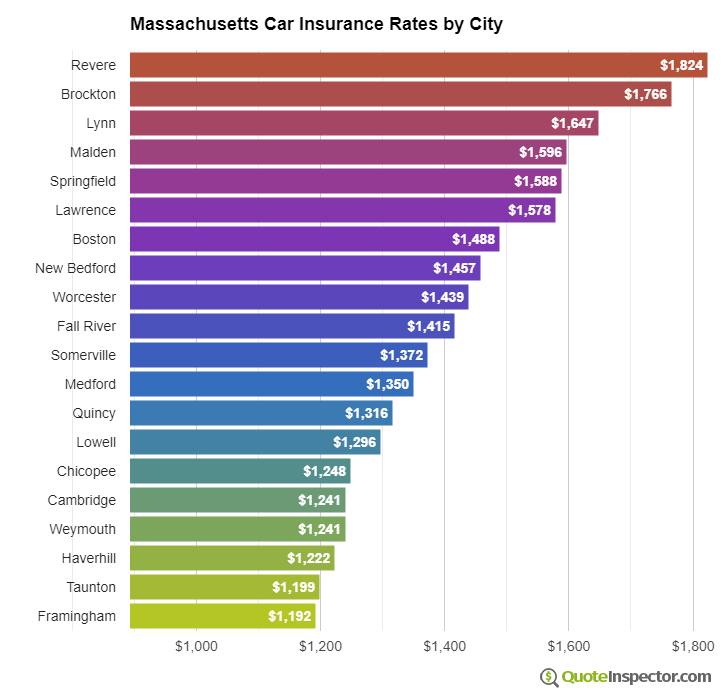
The smartest Massachusetts drivers do not just hunt for the cheapest number—they compare the best value for the same protection. A low quote can look tempting until you notice thinner limits, bigger deductibles, or missing features.
Start by collecting quotes from three sources: direct insurers, independent or captive agents, and online comparison tools. To make those prices meaningful, keep every quote aligned with the same liability limits, deductibles, optional add-ons, and listed drivers. If one quote includes roadside assistance or rental reimbursement and another does not, the cheaper option may not actually be the better deal.
Build a true apples-to-apples comparison
Before you request quotes, gather your details once so every insurer prices the policy using the same facts. This saves time, reduces errors, and makes it easier to spot whether a company is truly competitive or simply quoting a different level of protection.
Use this checklist before you start:
- Driver’s license numbers for all household drivers
- Vehicle identification number (VIN), year, make, model, and trim
- Current policy declarations page, if you already have insurance
- Desired effective date and current coverage limits
- Estimated annual mileage and primary vehicle use
- Home address, garaging ZIP code, and ownership or lease details
- Safety features, anti-theft devices, and driver training history
- Records of tickets, accidents, or claims from recent years
Once your information is ready, request quotes in one sitting. Ask each company or agent to match the same coverage setup, then compare more than premium alone. A responsive table like the one below helps organize what matters most when prices are close.
| Insurer | Price | Coverage Options | Service & Discounts |
|---|---|---|---|
| Company A | Monthly and 6-month premium | Deductible choices, rental, roadside, gap | Claims reputation, bundling, safe-driver savings |
| Company B | Monthly and annual total | Accident forgiveness, OEM parts, glass coverage | Complaint record, app tools, multi-car discounts |
| Company C | Upfront fees and installment options | Custom equipment, rideshare, uninsured motorist options | Local agent support, paperless, autopay discounts |
After narrowing the field, read the policy details with extra care. Look for exclusions that limit when damage or injuries are covered, especially for business use, excluded drivers, custom parts, or shared vehicles. Check the deductible on each physical damage coverage so you know what you would pay before insurance contributes.
Also review the policy limits, not just whether a coverage exists. A provider offering lower property damage or bodily injury limits can appear cheaper while exposing you to larger out-of-pocket costs after a serious crash. For additional confidence, research Massachusetts complaint trends through state consumer resources and compare how insurers handle claims, billing issues, and customer service disputes.
Mistakes to avoid: buying only by price, accepting unmatched quote comparisons, skipping the fine print on exclusions, choosing deductibles you could not comfortably pay, or overlooking protections required for your situation.
If you still feel torn between two insurers, ask one final question: which policy gives you the clearest balance of price, protection, and dependable claims help? In Massachusetts, that combination usually beats the lowest headline premium every time.
Last Word
The best Massachusetts policy is the one that keeps a surprise accident from becoming a financial setback. Compare equal quotes, choose limits that fit your life, and use discounts wisely so your premium feels intentional, not painful.
Answers to Common Questions
Is Massachusetts auto insurance expensive?
It is moderate to moderately high, especially in Boston and for younger drivers.
What is the cheapest coverage option?
Minimum coverage is cheapest, but it offers limited protection for your own car.
Do financed cars need full coverage?
Usually yes, because lenders commonly require collision and comprehensive.
Can a higher deductible save money?
Yes, premiums often drop, but you must afford more out of pocket after a claim.
Do tickets raise rates in Massachusetts?
Yes, moving violations and at-fault accidents commonly trigger higher premiums.
How can I compare quotes accurately?
Use identical limits, deductibles, mileage, and driver details with every insurer.